Snoring could be the sign of an underlying problem.
DOES your other half bug you with his or her snoring? It seems men snore more than women. In fact, habitual snoring is common among 32% of men and 14% of women. According to a study conducted by the British Snoring and Sleep Apnoea Association, partners of millions of snorers are kept awake for two hours each night, losing some two years’ sleep over the average course of a marriage!
Heavy snoring can be a symptom of obstructive sleep apnoea (OSA). The snorer may, unknown to him, experience breathing cessation that could be fatal. Obstructive sleep apnoea also contributes to excessive daytime sleepiness, cardiovascular disease, and hypertension.
Snorers are often advised by doctors to avoid aggravating factors like drinking alcohol, smoking and the use of sedatives or muscle relaxants. Obstructive sleep apnoea can lead to weight gain, and those with the condition are three times more likely to suffer from diabetes.
Recently, researchers at the University of Leeds in Britain also discovered that heavy snorers are at a higher risk of developing Alzheimer’s disease because of the lack of oxygen flow to the brain.
Obstructive sleep apnoea results from the temporary blockage of the upper airway during inspiration while the sufferer is asleep. As the airway narrows, the velocity and pressure of the inspired air increases, causing the soft tissues of the throat to vibrate, producing snoring sounds.
Yap Ming Tian, managing director of Panmedic Sdn Bhd, used to try different methods, including nasal plastic strips and nasal sprays to stop himself from snoring. “I used to wake up more than once a night because I couldn’t breathe,” he said.
“Quite often, my eyeballs felt tense and tired the next morning. It was not strange for me to feel extremely sleepy while driving, sometimes dozing off for a second or two.”
While visiting his daughter, who is a doctor in London, during one of those nights, he went into a deep sleep, snored loudly and without warning, woke up with a strong jerk.
After consultation, his daughter diagnosed him as having obstructive sleep apnoea. She immediately prescribed SomnoGuard AP for him.
On using it for the first time, Ming Tian recalled, “I felt very fresh the next morning. I found it to be a helpful device and wanted to bring it over to help other Malaysians with their OSA problems.”
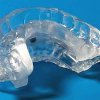
SomnoGuard AP is a second generation mandibular advancement device. It looks like a denture, but it’s made of flexible, hypoallergenic thermoplastic, which can be easily moulded and fitted by the wearer. The device advances the lower jaw forward, thereby extending the airway at the base of the tongue and reducing snoring and the breathing arrests due to obstructive sleep apnoea.
Manufactured in Germany, and tested effectively in several clinical trials and sleep labs, it has been available in Malaysia since 2007.
SomnoGuard AP is made up of two parts. The lower part has a screw system so as to increase the space behind the tongue so that the soft tissues around it do not vibrate or close during sleep. This reduces snoring immediately and cuts down significantly the incidence of stoppage during breathing. Besides, the appliance fits snugly on the teeth, making it comfortable to use during sleep.
To prepare fitting of the appliance, it is necessary to heat the top and bottom parts of the appliance in boiling water to soften the thermoplastic and make an accurate impression of the upper and lower teeth. The device allows lateral movement of the lower jaw during sleep, facilitating the feeling of comfort during usage. Another key feature is it allows titratable advancement of the lower jaw from 0 to approximately 10 or more millimeters. This enables accurate adjustment of the appliance to meet the specific needs of each user for optimum intake of air during sleep. It is also easy to adjust the appliance at home for best comfort when conditions of the tissues around the buccal cavity change over time.
SomnoGuard AP allows our natural breathing function to draw in atmospheric air smoothly through our nose and mouth, the latter advantage especially important for those who breathe through the mouth during sleep or who suffer from blocked noses.
As opposed to the bulkiness of electrical equipment for sleep apnoea, the device is small, lightweight, durable and is easily included in one’s belongings when travelling. There is no accessory to use.
It has been hailed as a technological breakthrough in mandibular advancement. It has USFDA clearance and is CE marked by European Health Authorities.
souce:the star
Device to curb snoring