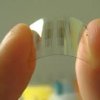
In a world first, a Singapore scientist and his team have developed a chip which can detect up to 70,000 different viruses and bacteria in one test.
SINGAPORE: In a world first, a local scientist and his team have developed a chip which can detect up to 70,000 different viruses and bacteria in one shot.
Currently, typical diagnostics test for less than 50 different viruses.
The idea to develop a device which can detect all viruses came about because of the outbreak of SARS (Severe Acute Respiratory Syndrome) 10 years ago.
During that time, there was no easy method for physicians to pinpoint the disease.
Patients were kept in isolation, with several tests performed before it was determined if they had the virus or not.
Dr Christopher Wong, chief scientific officer for translational technologies at the Genome Institute of Singapore, said: "Current diagnostics tend to be based only on a single pathogen. In other words, if you say, 'I want to test to find out whether you have dengue or not'. That is one test. Then, you say, 'oh, you don't have dengue but I'm also worried, do you have chikungunya?' That's a second test. Or, it could be, 'do you have flu?' So that's a third test."
Ten years later, scientists are hoping the chip will prove to be a big advantage during epidemics, with its ability to diagnose diseases fast.
A DNA sample from an infected patient is extracted and then put on the chip.
Within 24 hours, a report is generated, showing which viruses are detected.
The chip can also detect new viruses, such as the avian influenza A (H7N9) virus first found in humans last month.
Dr Edison Liu, president of Human Genome Organisation, said: "All the 70,000 pathogens are in one way or another related to each other, not closely but related enough, so that the probes were constructed and selected specifically to be generalised, if need be. So if you have a new SARS virus, a new coronavirus that is SARS-like and you've never seen it before, this (chip) will detect it."
Right now, the chip is just being used for research purposes but developers hope that once it gets FDA approval, it can be used in hospitals. They say it can potentially free up bed space.
That's because once the patient's disease is identified, they can be treated more quickly and discharged earlier.
And while only one chip can be used per patient, developers say it is still cost-effective, as the device costs less than S$600 and only needs one technician to operate.
source:CNA
Multi-virus detector chip created by Singapore team