
High-performance green buildings provide many benefits that enhance employee productivity, improve environmental performance and reduce operating expense. To capitalize on these many benefits, Baxter has a policy that any new buildings or major renovations of existing structures should include an assessment of sustainability aspects including water and energy efficiency, possible use of renewable energy, and availability of public transportation. The company is incorporating green building design principles at several sites worldwide, and has achieved or is working toward U.S. Green Building Council Leadership in Energy and Environmental Design (LEED) or other similar certifications at numerous locations.
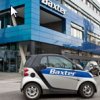
One example is Baxter's combined laboratory and office facility in Vienna, Austria. The company began construction of this site at the end of 2008 and completed it in early 2012. In March 2011, the Baxter-owned facility received LEED Gold certification.
The four-story, 2,050 square meter structure, which houses about 170 employees, has several innovative features that enhance its environmental performance while also providing an outstanding working environment:
- A green roof reduces the temperature inside the building on hot, sunny days by up to 15 degrees Celsius and helps to offset the 'heat island' effect in the city by absorbing and not redirecting energy from the sun.
- Windows that can open provide natural cooling and increase employee comfort.
- The building's design, orientation and reflective surfaces illuminate up to 99% of employee areas, using natural daylight, saving 9,000 kWh of electricity per year.
- A geothermal cooling system uses the relatively constant temperature of the ground water, as opposed to traditional heating, ventilation and air conditioning (HVAC) chiller systems.
- An ammonia-based chiller, instead of an HFC-based unit, meets additional cooling needs. Ammonia has zero ozone-depleting or global warming potential.
- The building's HVAC energy recovery system and variable speed drives save 700,000 kWh of electricity per year.
- Electricity generated by solar photovoltaic panels power the building's LED Baxter sign.
- Water-saving features include low-flow toilets, which use well water instead of potable water, and low-flow faucets.
Due to these and other features, the building consumes about 45% less energy and 86% less water than a typical office building of the same size. This decreases the annual operating costs of the building by 33% and saves the company about $58,000 each year. In Addition, all of the electricity used by Baxter in this building and throughout the company's facilities in Austria is generated from 100% certified renewable energy.
Baxter has also achieved green building certifications at facilities in Rome, Italy (LEED Italia Silver in 2011); Lyon, France (BREEAM Good in 2011), Zurich, Switzerland (Minergie Plus in 2010), and others. See EHS Management Systems for a summary of Baxter green building certifications. The company plans to further expand use of green buildings in the coming years.