Malaysia is probably one of the lesser known markets to the French medical device industry until recently, when many of the players decided to expand operations in Asia.
MALAYSIA is probably one of the lesser known markets to the French medical device industry until recently, when many of the players decided to expand operations in Asia.
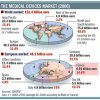
France, the fifth largest medical device market in the world behind the US, Japan, Germany and the UK, is saturated with too many competitors.
Many are forced to go out of France and others to look out of Europe to tap market potential elsewhere, said Dr Jaber Bensenane, director of medical, economic and technical affairs of SNITEM, the national association of the medical technology industry in France.
Malaysia's strategic location is ideal as a gateway to expand their market opportunities.
"Malaysia, as an investment location, is quite unknown to the French business community," Dr Bensenane told Business Times in an interview.
SNITEM is a trade association that represents more than 230 member companies from France's medical technologies sector.
Most of the 2,000 French companies in the medical device manufacturing sector are small- and medium-sized enterprises (SMEs) who are involved in numerous activities ranging from operating theatre equipment, anaesthetics, rehabilitation, orthopaedics and intra-ocular implants, home care and non-invasive therapy.
SNITEM members are looking to this part of the world, especially in growing Asia, and increasing demands are already being seen in China, India, Japan and South Korea.
"As countries grow more developed, their life expectancies are also longer, which translates into older people requiring more medical care whether it is for treatment or home care. Also, these countries have gained access to sophisticated medical treatment to meet the increasing demands."
Dr Bensenane said the health expenditure to the countries' gross domestic product (GDP) ratio also improves as they further develop and it can grow to more than 10 per cent of the GDP.
A former surgeon, Dr Bensenane grew curious about Malaysia's competitiveness as an investment location for fellow French businesses when he visited the Malaysia Industrial Development Authority (Mida) in Paris.
"The information I received indicated that Malaysia is a good destination due to its strategic location as a gateway to the large Asean market.
"The skilled and cheap labour force and tax incentives also enhanced its attractiveness.
"To us, doing business is more than buildings, machinery and hiring employees. It also means exchanging ideas, good relations between employers and employees," he said.
On Mida's invitation to study the prospects for Malaysian companies, Dr Bensanane has met officials from the Association of the Malaysian Medical Industry and the Malaysian Medical Device Association in Kuala Lumpur.
He has also visited large-scale manufacturers such as B Braun (German), Ambu (Danish), both located in Penang, and supporting companies Isotron (Swedish) in Kuala Ketil, Kedah, and Rawang-based Sterilgamma, apart from those related to medical devices industry organisations such as Infokinetics and Advanced Material Research Centre (Amrec) and CRC (Clinical Research Centre).
According to Mida, there are about 179 medical device manufacturers in the country, with the majority of the Malaysian-owned companies concentrated in the production of surgical and examination gloves.
The major foreign-owned companies, other than producing gloves, are also involved in the manufacture of higher value products such as catheters, safety intravenous cannula needles, orthopaedic products, medical electrodes, dialysers and contact lenses.
Major foreign companies with manufacturing facilities in the country are B.Braun Melsungun AG, Ansell Ltd, CR Bard Ltd, Rusch Inc, Tyco Healthcare Inteational ltd, Ambu Inc and Japan Medical Products.
Homegrown companies which have a strong market share in the industry include Top Glove, WRP Asia Pacific and Supermax.
B.Braun, a global supplier of healthcare products, has further invested in Penang to facilitate the production of its intravenous catheters ( IVCs) above the RM200 million which has been invested.
Mida has approved 25 projects with investments worth about RM526.9 million in 2007.
"Now that I have visited Sterilgamma, B.Braun and Ambu and seen (that) they can manufacture medical devices with high quality to meet the health safety specification of the US Food and Drug Administration, Japan's JMHLW, or France's Afssaps.
"If I am a European manufacturer, I would not hesitate to choose Malaysia because of its strategic location. East Europe may offer cheaper alteatives to European manufacturers but the products from Poland, Hungary or Romania have to reach Rotterdam before they are sent to markets abroad," said Dr Bensenane.
He explained that the fragility of medical devices meant that the less handling of shipments the better, and manufacturers therefore preferred to have manufacturing facilities in this part of the world.
"In the case of Malaysia, there has been a strong interest for medical devices industry and the potential to manufacture some special devices like orthopaedic implants, cardiovascular devices and devices for monitoring."
Dr Bensenane plans to bring a delegation of French companies to Malaysia to discover the country's medical devices industry
source:NST
French keen on Malaysian medical devices market