

MAINTAINING A REPUTATION: University of Malaya’s Faculty of Medicine must tackle students’ declining interest in Science to chart another 50 years of innovations and scientific achievements
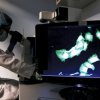
LONG hours and frequent visits to the laboratory to pore over tissue cultures are all in a day’s work for Nam Hui Yin.
The third-year doctoral student at the Faculty of Medicine, University of Malaya (UM) is researching into mesenchymal stem cells — connective tissue cells (such as those of bones and fats) that can change into a different form — and their potential clinical uses for her thesis.
She hopes to eventually teach at the faculty.
“I chose to do my doctorate at UM as it is a reputable university with high standards. I want the best for myself so that’s why I study here,” says Nam, who graduated with a Bachelor of Science in Biology Conservation from Universiti Malaysia Sabah before pursuing her Master’s in Biotechnology at UM.
Indeed, UM’s medical school has a well-established reputation for quality of teaching and research.
It has made some key contributions to medical research in Malaysia in the last 50 years including performing the country’s first successful conjoined twin separation (1981-1982) and liver transplant (1992), discovering the deadly
Nipah virus (1999), and executing a craniofacial surgery (using the monobloc distraction osteogenesis technique) in collaboration with the Faculty of Dentistry last year.
These achievements were highlighted during a three-day symposium hosted in celebration of the faculty’s golden jubilee anniversary recently.
The three-day festivities kicked off with the launch of a research week filled with academic workshops, lectures on recent trends in medical sciences and science poster exhibitions.
Deputy dean (research) Professor Dr Tunku Kamarul Zaman Tunku Zainol Abidin says: “There is no better way to celebrate the anniversary than to share our past and present research with the public.”
The faculty traces its history back to 1905 with the founding of the Straits Settlements and Federated Malay States Government Medical School in Singapore, which was set up to train the first batch of Malayan doctors.
Its name was changed to King Edward VII Medical School in recognition of a gift of $120,000 from the King Edward VII memorial fund in 1912.
In 1921, it was known as the College of Medicine to reflect its status as a tertiary institution. The college then amalgamated with Raffles College to form the University of Malaya in 1949, and became the Faculty of Medicine.
The current med school at the Kuala Lumpur campus first opened its doors to pre-medical students in May 1963.
It has since produced more than 5,000 doctors and 10,000 graduates, including former prime minister Tun Dr Mahathir Mohamad, and Monash University Malaysia campus medicine school head and former UM vice chancellor Professor Datuk Dr Anuar Zaini Md Zain.
It boasts 483 academic staff members, 13 research centres, more than 20 laboratories supported by research grants totalling US$100 million (RM300 million), and collaborations with more than 50 leading tertiary institutions worldwide.
It is little wonder that the faculty was ranked in the world’s top 113 schools in the area of Life Sciences and Medicine last year.
Fresh from celebrating its golden jubilee, the faculty is eager to chart another 50 years of excellence through translational research, which refers to a systematic effort to convert basic research knowledge into practical applications to enhance human health and well-being.
The faculty has chosen to focus on five areas which are infectious diseases and immunity, cancer, drug discovery and development, public health and non-communicable diseases, and ageing and regenerative medicine.
Kamarul Zaman believes that an emphasis on research is the way forward for the institution and Malaysia.
“Many studies show that countries which spend a large amount of money on research are also the most developed,” he says.
He is happy that the faculty has done well in this aspect lately.
“We have had more papers published in high impact research publications in the past five years than in the last 50 years. The number has increased threefold,” he adds.
Its postgraduate student population has also grown exponentially. There are currently 301 students pursuing their doctorates, 992 completing their clinical Master’s studies and 317 undergoing non-clinical Master’s programmes.
However, foreign doctoral candidates make up the majority of its postgraduate students.
Kamarul Zaman admits that getting sufficient quality local students to take up postgraduate research amidst declining interest in Science has been a challenge.
It was reported that only 20 per cent of the Sijil Pelajaran Malaysia candidates last year were from the Science stream — a figure well below the national target of 60 per cent.
“Only one-third of (secondary school-leavers) are pursuing Science courses at university level. And when that happens, our pool of potential researchers becomes smaller,” says Kamarul Zaman.
“While the faculty has successfully produced many undergraduates who become doctors, we do not have enough people who naturally want to become scientists,” he adds.
He blames this on the lack of initiative and interest among local students. Apparently, they want “too much help to complete their research”.
“Perhaps they’re so used to rote learning in school or are getting all the answers they need from the Internet. But research is about embarking on a journey of discovery,” he says.
Still, deputy dean (undergraduate) Professor Datin Dr Hamimah Hassan hopes that early exposure to basic research during undergraduate years will whet students’ appetite for more challenging work later on.
“Admittedly, not everyone wants to do research. But we’re hoping that there are excellent medical students who come back (to conduct research),” she says.
Her only fear is that the number of outstanding students is shrinking.
“We’re keen to enrol people who are very interested and capable. The trouble is some students lack communicative skills — they are not proficient in English so they are less able to write reports, present cases and exhibit good professional values,” says Hamimah.
Other than a sterling academic performance, potential researchers are expected to be independent, sharp and critical.
Nam knows this and has chosen to remain focused on her work.
“I often go to the laboratory to check on my experiment and spend at least two hours there. There are times when I have to go there at midnight since it is a time-based project. I spend all of my spare time reading journals and participating in conferences to broaden my insight. But that is what research is about. You have to throw yourself heart and soul into it,” says Nam.
source:NST