
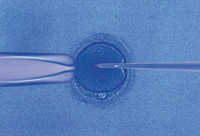

This year's Nobel Prize in Medicine is unique in Nobel Prize history, being the first to be awarded in the area of reproduction. British scientist Robert G. Edwards receives the award for his pioneering achievements in human in vitro fertilization (IVF). Together with his colleague Dr Patrick Steptoe (died 1988), a gynaecologist, he developed the technique of fertilizing human oocytes outside the body before implantation in the womb. They were the pioneers for further developments such as Intracytoplasmic Sperm Injection (ICSI), where a single sperm is microinjected directly into the oocyte.
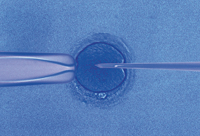
Since the birth of the first ‘test tube baby', Louise Brown, in 1978, around four million babies have been born following IVF, many as a result of the ICSI technique, which today accounts for over 60% of all IVF treatments. ICSI was first used at the beginning of the nineties and in 1996, Eppendorf launched the electronic micromanipulator TransferMan®.
Demand for IVF treatments continues to grow and Eppendorf remains at the forefront of product development in this area. Today the micromanipulator TransferMan® NK 2 and the microinjectors of the CellTram® series offer the highest precision for all common applications such as ICSI, IMSI, TESE, assisted hatching and polar body biopsy. For these techniques, certified, sterile, high precision microcapillaries are also available. Eppendorf VacuTip® and TransferTip®, as well as Polar Body Biopsy Tip MML and IMSI/TESE Tip microcapillaries are certified for use in IVF laboratories.
Designed to meet the specific demands of these highly specialised IVF techniques and subjected to intensive quality control, Eppendorf microcapillaries ensure reproducible quality and sterility.