
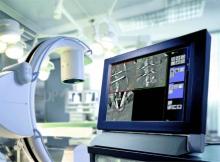

Siemens Healthcare has already contributed to reducing the radiation dose in diagnostic and interventional radiology with many technical innovations. Now Siemens is the first manufacturer to issue a "Guide to Low Dose". Aimed at physicians and medical technical staff, this guide describes the basics of radiation used for medical purposes. It gives a detailed explanation of the functions currently available to reduce the dose in radiological imaging from Siemens. Users learn about how these features can help them to protect patients and clinical staff by minimizing the dose during examinations. Siemens is also stepping up its communication activities around the issue of low dose: by offering numerous new seminars, training courses and presentations over the next two years, Siemens will be working harder than ever before to support clinical staff and management in implementing dose monitoring and reduction measures.
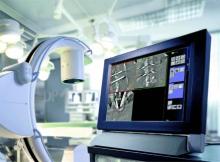
"In the most relevant imaging procedures, such as computed tomography, angiography and molecular imaging, Siemens has pioneered the development of dose reduction technologies for many years," says Dr. Bernd Montag, CEO Imaging & Therapy Systems Division, Siemens Healthcare. "Now we're planning to launch a comprehensive education program which will support clinical staff in protecting themselves and patients better against avoidable radiation exposure. In this context, we'll be offering new training seminars and we will provide a Guide to Low Dose, among other initiatives."
For radiological and nuclear medicine examinations that involve the use of ionizing radiation with X-ray fluoroscopy or radiodiagnostics, the medical profession generally applies the "ALARA" principle - As Low As Reasonably Achievable. The aim here is to strike an ideal balance between the required image quality and the radiation dose. It usually takes an increased dose to enhance the image quality. For its radiological devices that work with X-rays or radioactive tracers, Siemens has therefore developed an entire range of technologies - Combined Applications to Reduce Exposure (CARE) - that enable the dose to be reduced significantly without compromising the image quality. These technologies include, for example, IRIS (Iterative Reconstruction in Image Space), a new method for the reconstruction of computed tomography (CT) images, and High Definition PET, a high-resolution Positron Emission Tomography technology for molecular imaging.
Alongside dose reduction, dose control is an important measure for avoiding unnecessary radiation. In future radiological devices from Siemens therefore will issue a warning message to the user if a certain dose threshold is exceeded in critical applications. Reports are generated for examinations; these contain the patient data, the relevant protocol and the dose values. Clinics can then analyze this information according to specific criteria, such as the doses administered, and optimize their protocols and processes accordingly.